Best Practices for Business Communication on WhatsApp
Introduction
WhatsApp has become one of the most effective communication channels for businesses. Customers increasingly prefer messaging over phone calls or emails because it's fast, convenient, and familiar.
However, simply using WhatsApp isn't enough.
Poor communication can lead to delayed responses, missed opportunities, frustrated customers, and inconsistent support.
Whether you're a startup, an e-commerce brand, a coaching institute, or a large enterprise, following the right communication practices helps create a better customer experience and strengthens your brand.
In this guide, we'll explore proven best practices that help businesses communicate professionally and efficiently on WhatsApp.
Why WhatsApp Matters for Business Communication
Customers expect businesses to be responsive, transparent, and easy to reach.
WhatsApp enables businesses to:
Answer customer questions quickly.
Share important updates.
Send documents, images, and videos.
Build stronger customer relationships.
Provide convenient support.
When used effectively, it becomes much more than a messaging platform—it becomes a valuable customer engagement channel.
Best Practices Every Business Should Follow
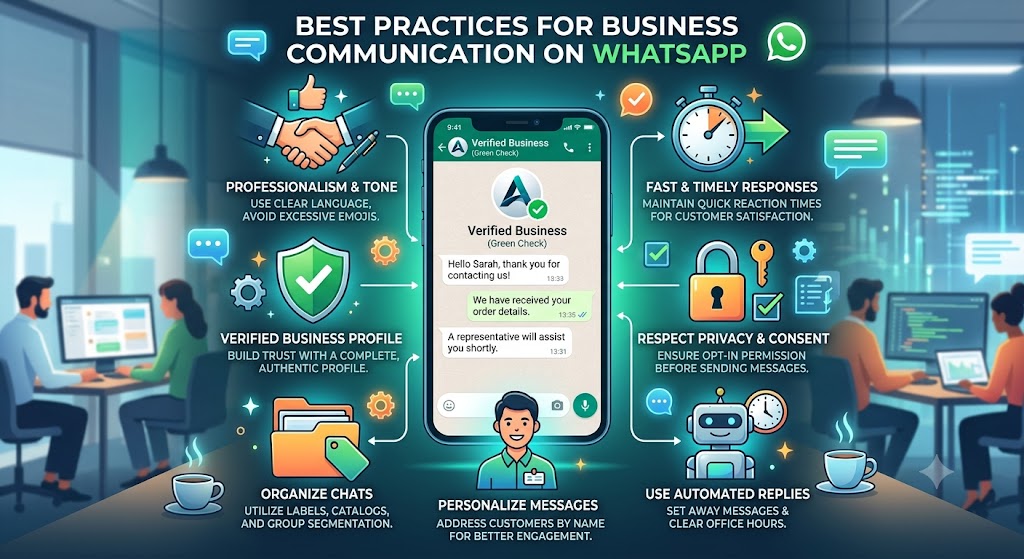
1. Respond Quickly
Fast responses create positive customer experiences.
Even if a full solution isn't immediately available, acknowledging a customer's message builds trust.
Auto replies can help during busy periods or outside business hours.
2. Maintain a Professional Tone
Use clear, polite, and respectful language.
Avoid overly casual communication unless it aligns with your brand and audience.
Professional communication reflects positively on your business.
3. Personalize Conversations
Address customers by name whenever possible.
Reference previous interactions to make conversations feel more human and less transactional.
Personalized communication strengthens customer relationships.
4. Avoid Spamming Customers
Only send messages that provide genuine value.
Too many promotional messages can cause customers to mute or leave your communication channels.
Focus on relevant updates, helpful information, and timely notifications.
5. Keep Messages Clear and Concise
Customers appreciate messages that are easy to read.
Use:
Short paragraphs
Bullet points
Clear calls to action
Avoid sending long blocks of text.
6. Set Expectations
If responses may take time, inform customers about your working hours and expected response times.
Transparency reduces frustration.
7. Organize Customer Conversations
As businesses grow, managing conversations manually becomes increasingly difficult.
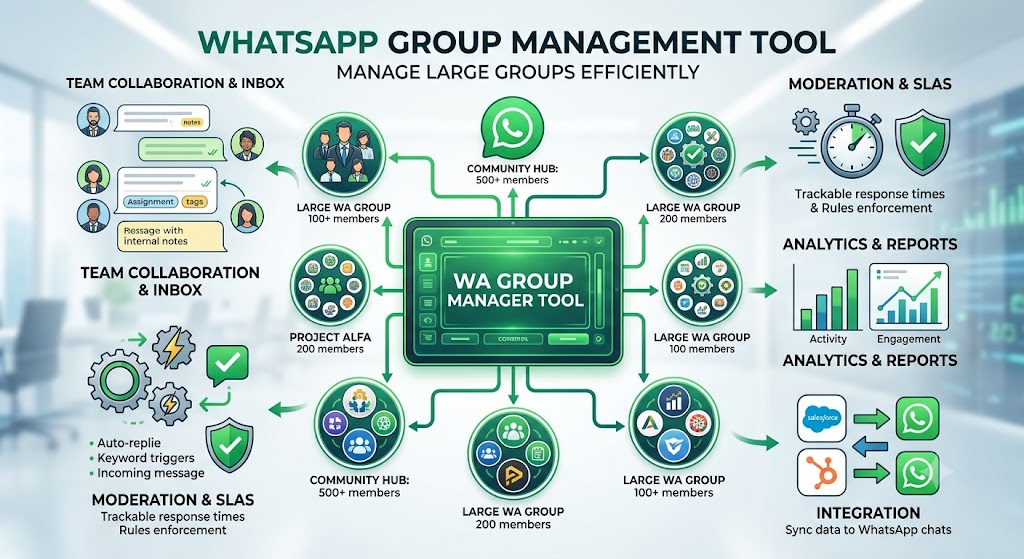
Using a centralized communication platform allows teams to track conversations, collaborate, and respond more efficiently.
8. Use Automation Wisely
Automation can handle repetitive tasks such as:
Welcome messages
Frequently asked questions
Appointment reminders
Order confirmations
However, important conversations should always receive personal attention from your team.
9. Protect Customer Privacy
Only collect information that is necessary and ensure customer data is handled responsibly.
Respect customer preferences and avoid unnecessary messaging.
10. Continuously Improve
Review communication performance regularly.
Monitor:
Response times
Customer feedback
Frequently asked questions
Engagement levels
Use these insights to improve customer communication over time.
Common Mistakes Businesses Should Avoid
Ignoring customer messages.
Sending too many promotional broadcasts.
Using inconsistent language.
Delayed responses.
Failing to organize conversations.
Overusing automation without human support.
How WhatsPilot Helps Businesses Communicate Better
As customer conversations grow, businesses need better tools to stay organized.
WhatsPilot helps teams:
Manage conversations from one platform.
Automate repetitive communication.
Collaborate across support teams.
Organize customer interactions.
Improve response efficiency.
Deliver a consistent customer experience.
Whether you're supporting hundreds or thousands of customers, WhatsPilot helps simplify business communication while keeping conversations personal and professional.
Frequently Asked Questions
Why do customers prefer WhatsApp?
It's convenient, familiar, and provides instant communication.
Can WhatsApp replace email?
For many customer interactions, yes. However, businesses often use both channels together depending on the communication type.
Is automation important?
Yes. Automation improves efficiency, but it works best when combined with timely human support.
Final Thoughts
Effective business communication isn't just about replying to messages—it's about building trust, delivering value, and creating positive customer experiences.
By following these best practices, businesses can improve response times, strengthen customer relationships, and create more organized communication workflows.
With tools like WhatsPilot, businesses can scale these practices through automation and centralized management, ensuring every customer interaction is timely, professional, and meaningful.
WhatsPilot Editorial Team
Writing about WhatsApp automation, business communication, and customer engagement strategies.
View all articles →Related Articles
What Is WhatsApp Auto Reply and How Does It Work? A Complete Guide for Businesses

How Businesses Use WhatsApp Communities to Build Stronger Customer Relationships